02 Photography
Frankfurt Through My Lens
Most people only pass through Frankfurt. I lived there for the length of a research project, and these are the photographs I like best from that time.
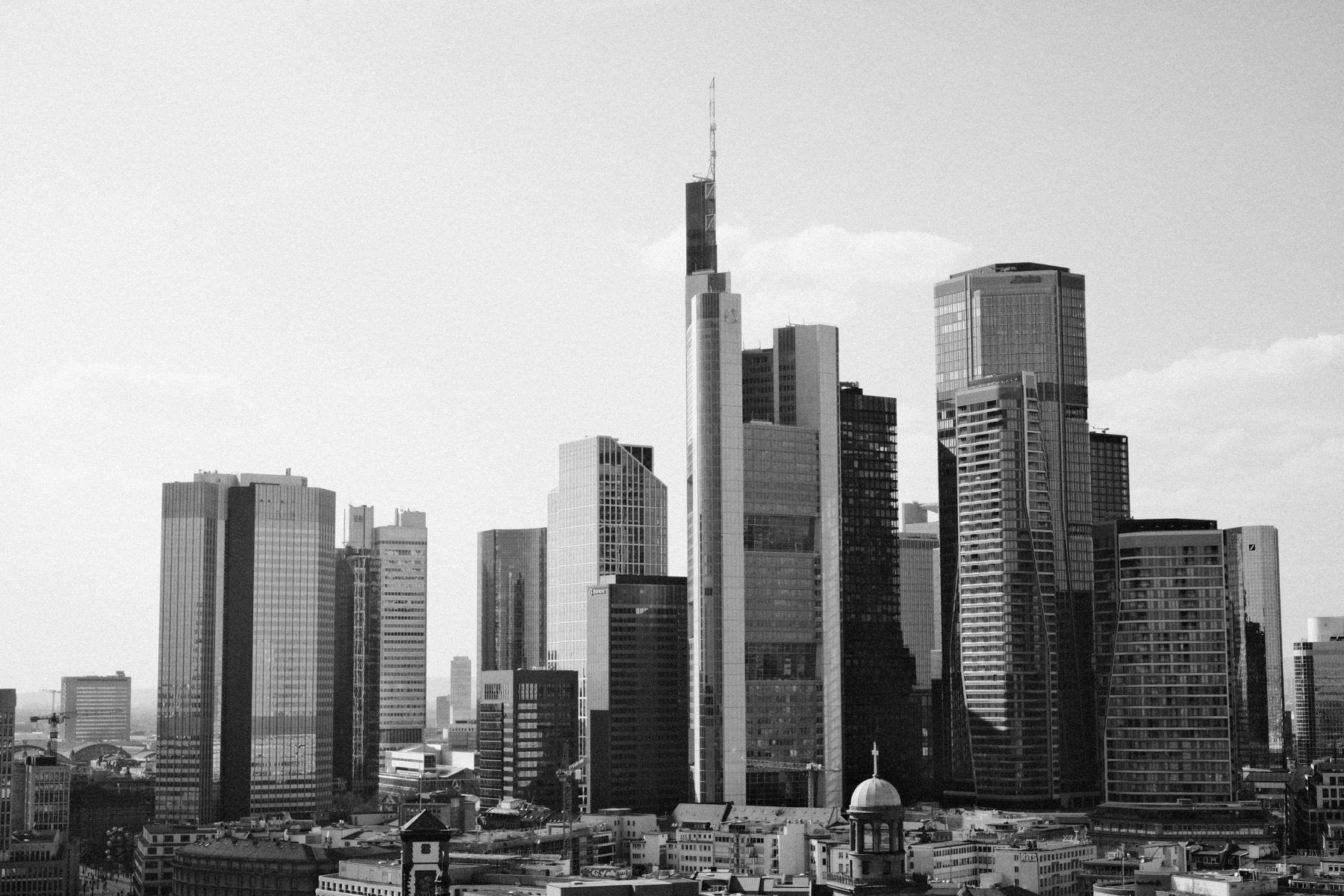
Frankfurt has a reputation, and it is mostly a transit one. It is the airport where you change planes, the skyline of banks that people call “Mainhattan,”1 the home of the European Central Bank. It is a city that many people cross without ever really arriving in it.
I did the opposite: I stayed. For the length of a research project at the university, my work took me to Pfungstadt, a small town south of Frankfurt.2 I chose to live in Frankfurt anyway and to commute. I have written before about how quickly small towns bore me, and I wanted to come home, at the end of the day, to a place that had something going on in it. Between conferences, trips to see my girlfriend, and visits to my family, Frankfurt became the place I kept returning to.
I did not go there to take photographs—still, the camera came along, as it always does, and every so often the city gave me something I wanted to capture. What follows is a selection: the frames I like most, shot on the days I felt inspired. There may be others scattered around my hard drive, but these are the ones I keep going back to.
Home
Briefly after my arrival, I was immediately greeted by the stereotypical German weather of March. As such, part of my first days were spent at home. Needless to say, boredom was quickly taking a hold of me—especially since I come from the south of Italy and I am really used to enjoy an averagely-good weather. Until, suddenly, a shy sun was creeping past some clouds.
The late-afternoon light was crossing the floor of the living room in a way that was beautiful. I was extremely bored in a house that was new to me. So I took my camera and started searching for spots of light that catched my interest. There they were. A tray of candles in moss, some glass details, and some TV remotes.
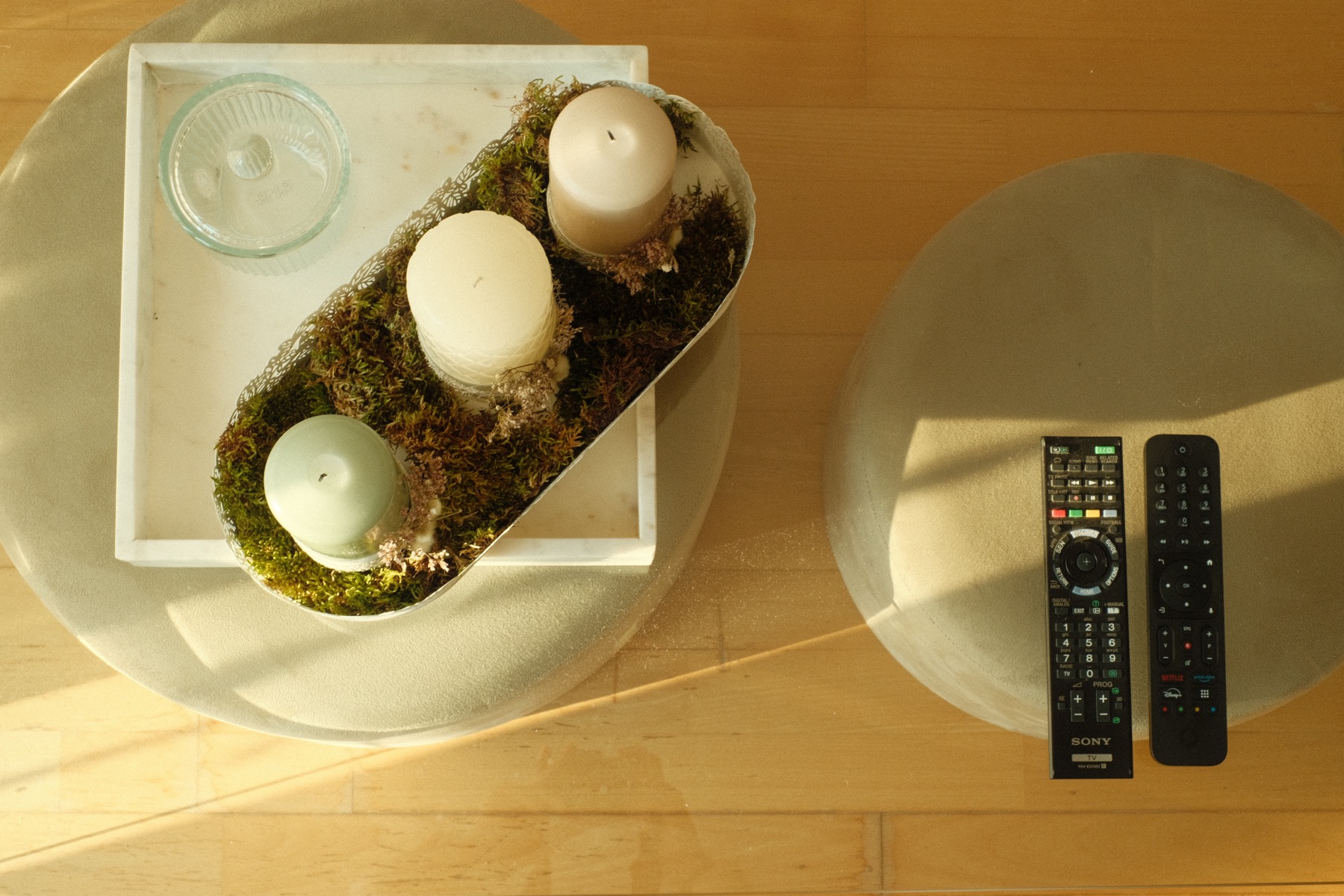
It may seem stupid, but those details spoke to me. It is the sort of things that tells you someone really lives here, and not only sleeps here. Outside, Frankfurt was quiet (I was staying in the perifery of Frankfurt, so traffice was much less than you could expect from such a city). This calm, warm, and cozy detail played into it. Every other photograph in this post exists, in a way, because I had somewhere quiet to come back to. This photo, for simple that it is, reminds me of appreciating the place I live in.
From Above
Luckily, the weather got better. I went around in the city, going into the city center and enjoying the romantic old town. Obviously, I stopped at the Dom. The Dom is one of the few places in the city where the old and the new fit in the same frame, and it lets you climb up to see it. From the top of its tower, I took two photographs a few minutes apart, standing more or lessin the same spot. I basically only had to turn around.

On one side, the towers. The skyline. I did not want to take yet another postcard-like shot of this same place, so I was looking at the crowd of shapes leaning on each other, leaning into the cacophony of the big economics buildings against the smaller residential ones.
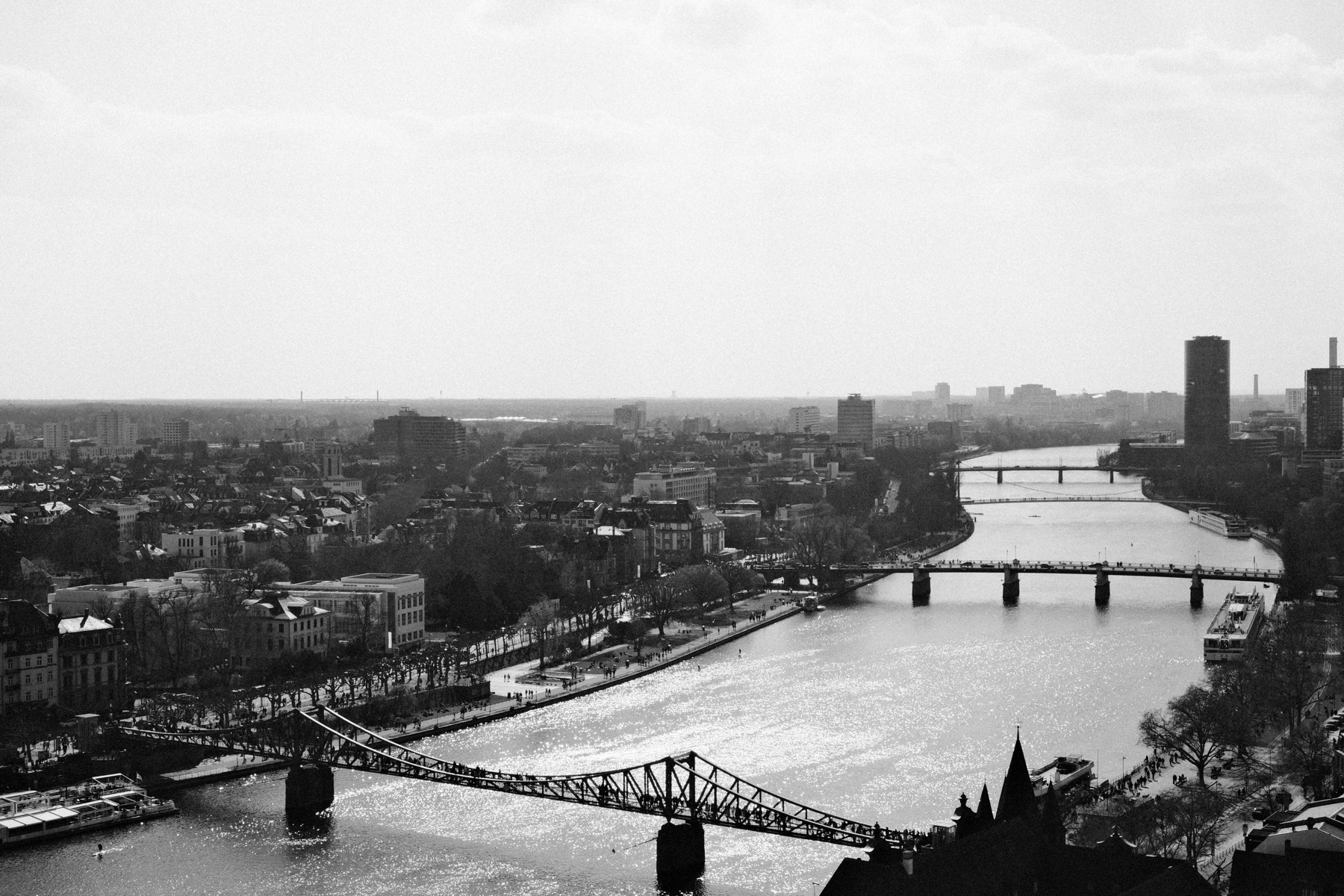
On the other side, the Main, the river that gives the city half of its name. The iron footbridge crosses it in the foreground, the other bridges fade into the haze, and the light turns the water into glitter.
Both shots are in black and white. I reach for black and white because I was respectively captured by the “brutalism” of concrete patterns and shapes, and by the contrast between land and bridges and water. I feel like colour would only have been noise in these.
From the River
I continued walking around, descending towards the river bank and walking for quite some time.
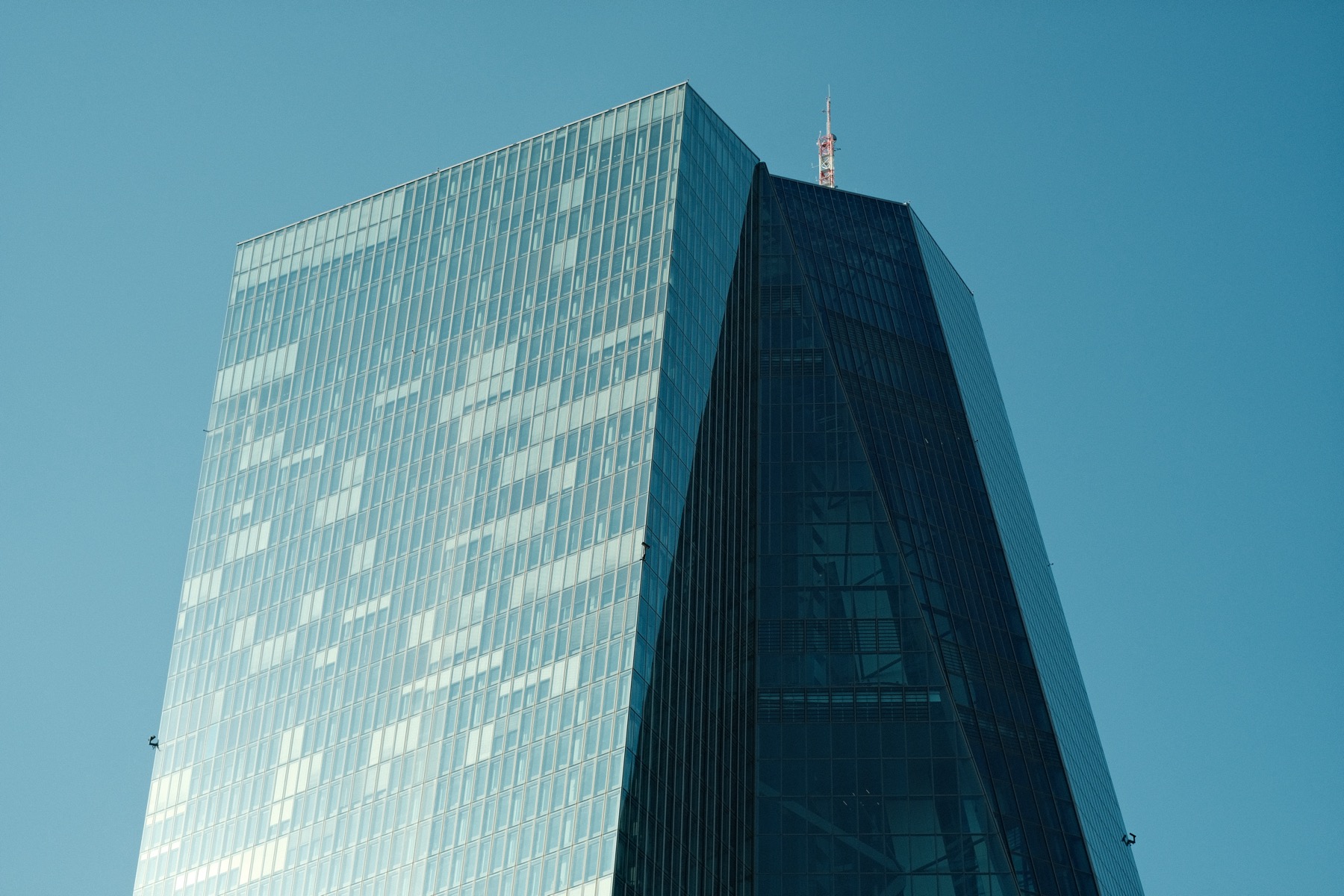
A great deal of Europe’s economic news is born inside this building. It is strange to stand in front of something you have only ever seen in headlines and discover that it is a tall, slightly twisted box of glass with a cheerful little antenna on top. I shot it in colour because the colour was the point: a teal sky, teal glass, and a dark wedge splitting the façade in two. The contrast was already built into the architecture, and I did not have to look for it.
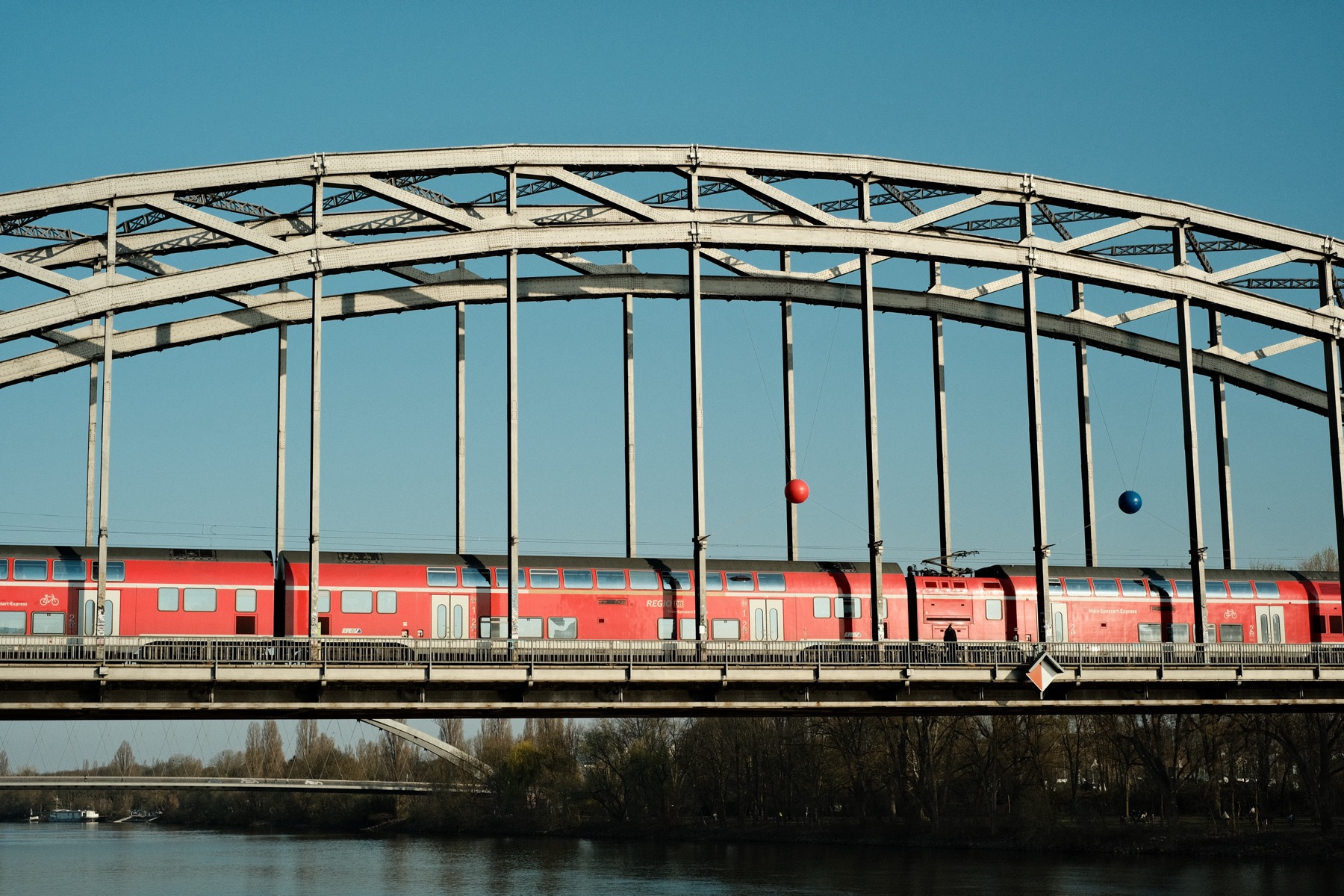
While walking, I also noticed this bridge. I got curiously attracted by two baloons—or wathever they are—on its railings. I was wondering how they got there, and wether they serve a purpose or are there just because someone left them. I raised my camera, to capture them. And suddenly, a Deutsche Bahn train (I suppose an S-Bahn by the look of it) goes through the bridge. I said (sarcastically) to myself that that was perfect: the only time a Deutsche Bahn train is punctual3, is for ruining a photo. But then I looked at it, and for some reason I liked the picture even more.
Underneath
Needless to say, during my stay there I took the S-Bahn some time. Admittedly, not as much as I expected (I also spent 6 months in Munich—there I really abused the underground stations and the Deutschland Ticket). One day, I was going to the airport to reach a conference. I got to the station, and I looked up.
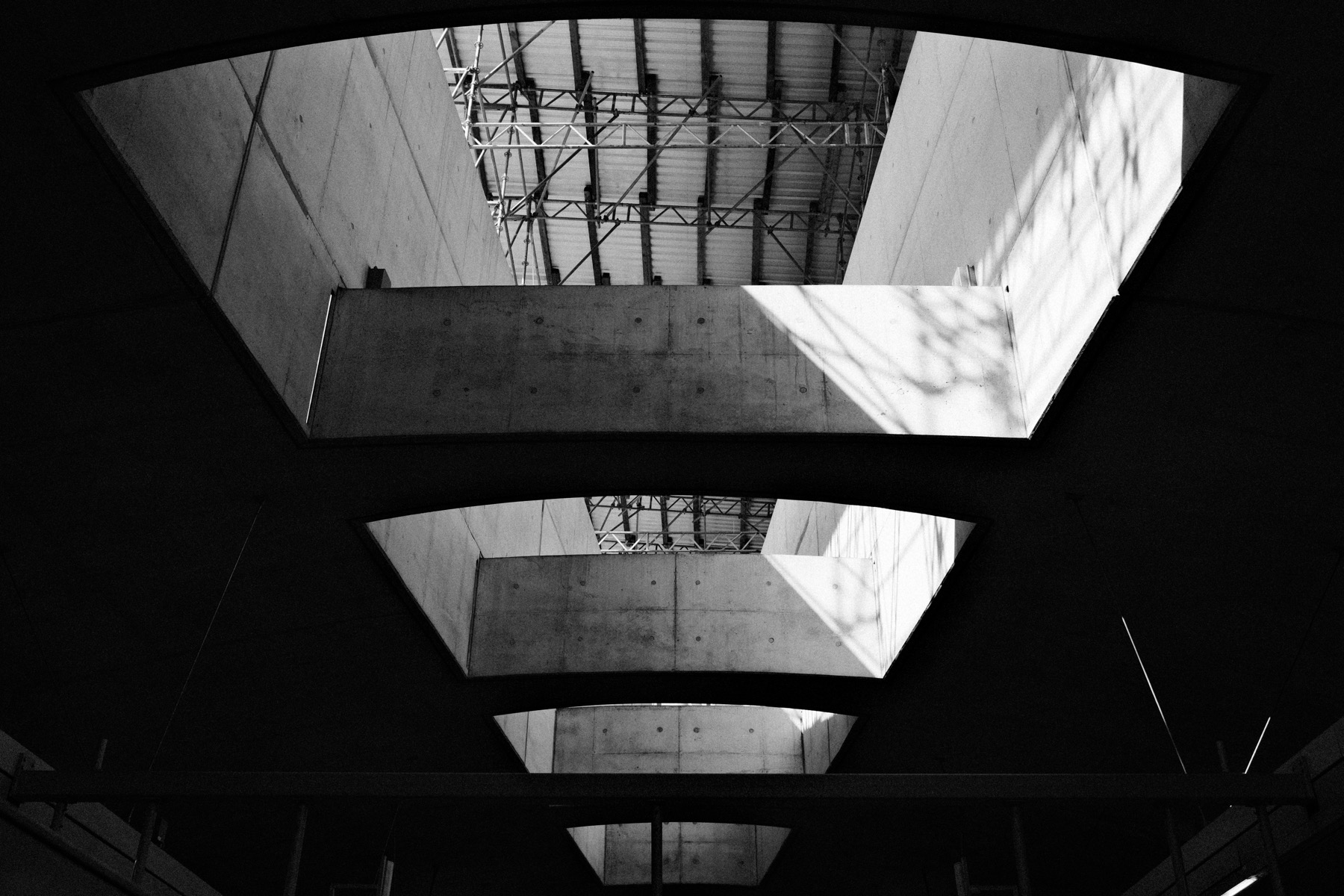
Here the brutalism rule applies in its purest form. Concrete openings sit inside one another like frames within frames, each smaller than the last, until they dissolve into black. Scaffolding shows through the first one, and a patch of light and shadow falls on the wall. Stations are designed to be walked through quickly, with your eyes on a screen or a timetable. I am glad I was early enough to allow myself to loop up.
After Dark
I will end where the day ends.
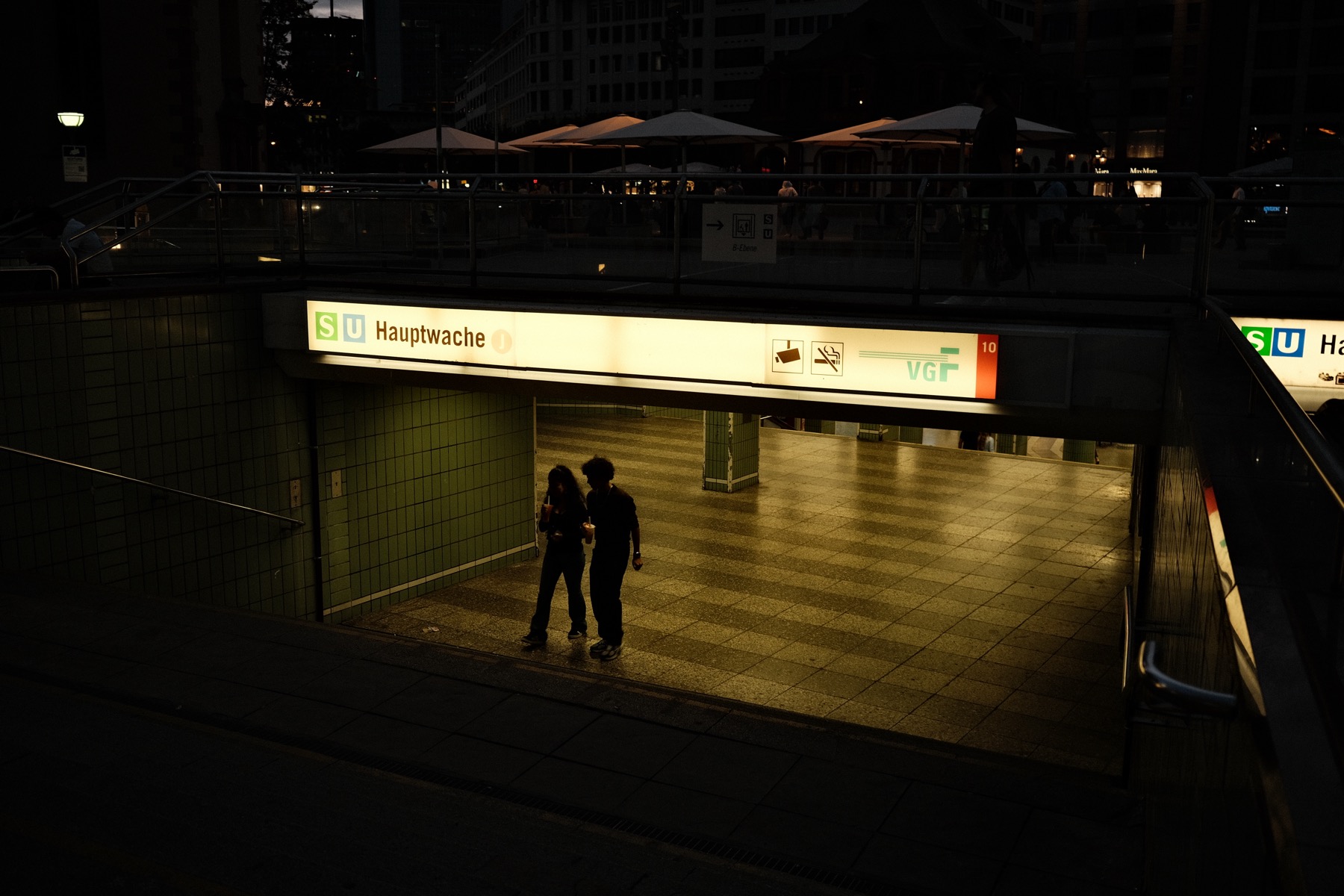
There is no real story behind this one. I fell in love with the light of the Hauptwache station: the green tiles, the glowing sign, the floor that looks wet even when it is not. I took a handful of shots from different angles, trying to get the camera to see it the way I did. Then a couple walked into the frame, and in some way I feel like they completed it. I do not know them, and they will never know that they are in my favourite photograph of the station. Somehow the empty version of the shot was missing something, and they supplied it.
What stayed
Looking at the photos together, I notice that they are arranged by distance. A living room, a view from above, a façade, a distant bridge, a ceiling, and finally, small and in silhouette, two people. I did not plan any of it. I went to Frankfurt for work and expected to take photographs only when the work allowed.
What I took away is that a big city rewards looking. It does not hand you its frames, and you have to be willing to stop, look up, and turn around. I am grateful that I got to live in this one long enough to do so.
The photos I chose here kind of reflect what I think about Frankfurt. A cacophonic city. A mix of cement and glass, but also the natural river. A mix of modernity, but also romantic architecture. A mix of noise, but also silence.
There are more frames on my hard drive, and perhaps some of them will find their way here another day.
Until next time!
-
A nickname that combines “Main,” the river, with “Manhattan,” on account of the skyline. ↩
-
Pfungstadt is a small town south of Frankfurt, in the state of Hesse. ↩
-
It is kind of a running joke that Deutsche Bahn trains are always late or with problems. I will be honest and say that I do not feel like it was that bad, but maybe I got lucky. ↩